

Welcome to Braneworld
Can "worldbuilding" challenge our Instagram-colored reality?

Last week I grabbed coffee with my friend Jamie Reddington – the electronic artist and producer known as Sound of Fractures.
Our meetup is a quarterly affair, stemming from an early 2024 feature I wrote on his beautiful Scenes project, where he invited listeners to contribute their favorite memories and pictures in response to his music.
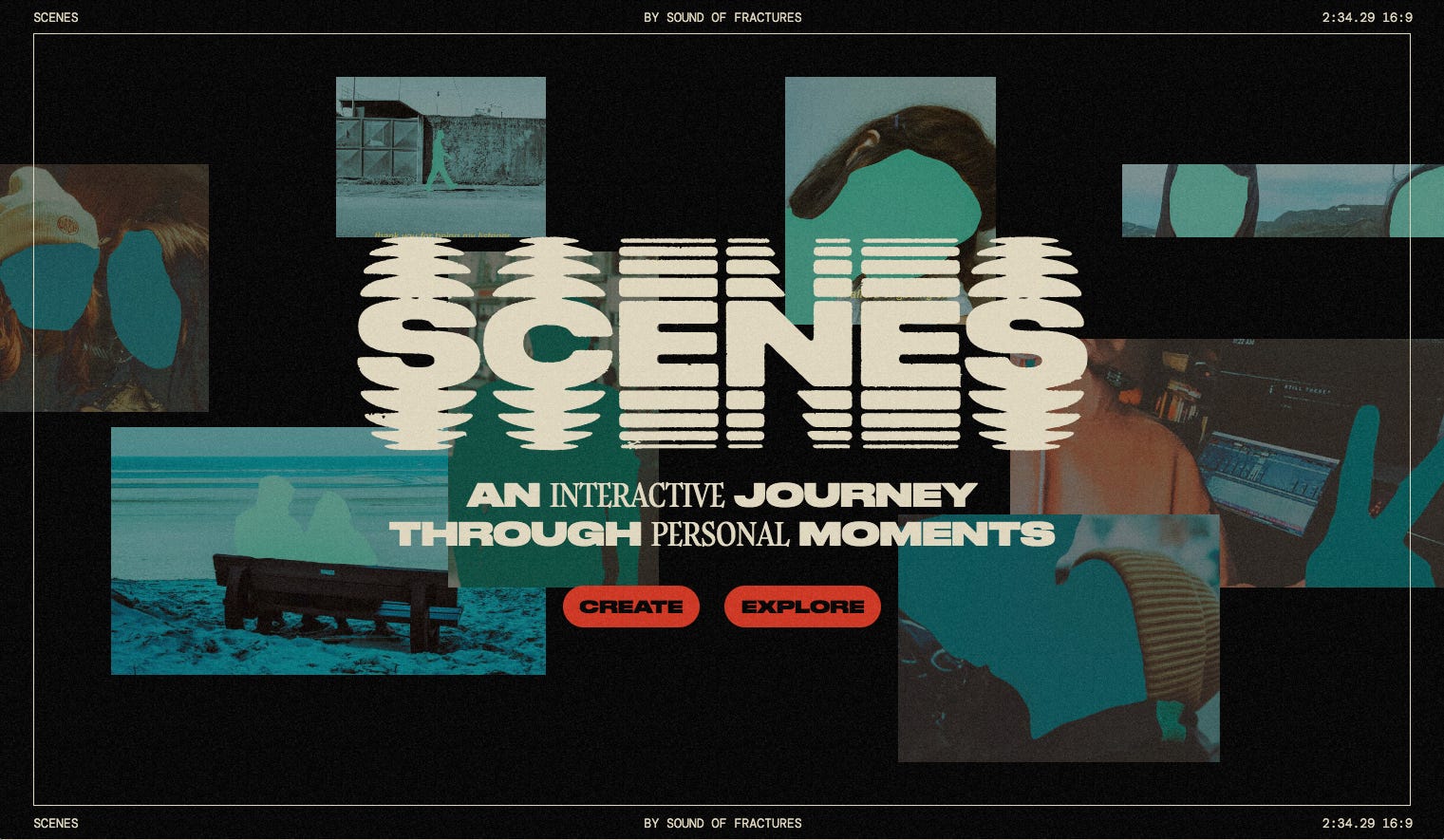
One of the themes of the piece is the misalignment between artist and platform narratives.
“The algorithm is designed to keep people on the platform, therefore it pushes you to make content that keeps people on the platform,” he said.
“[The algorithm] doesn’t push you to make connections with people who will go and tell someone else to buy your thing, or be a part of your community, or bring you into that world.”
Indeed, but what choice do we have? “The platform” — shorthand for an exploitative, billionaire-owned suite of enshittified creator platforms — persists as an essential gateway to the people.
How else might we bring them into our worlds?
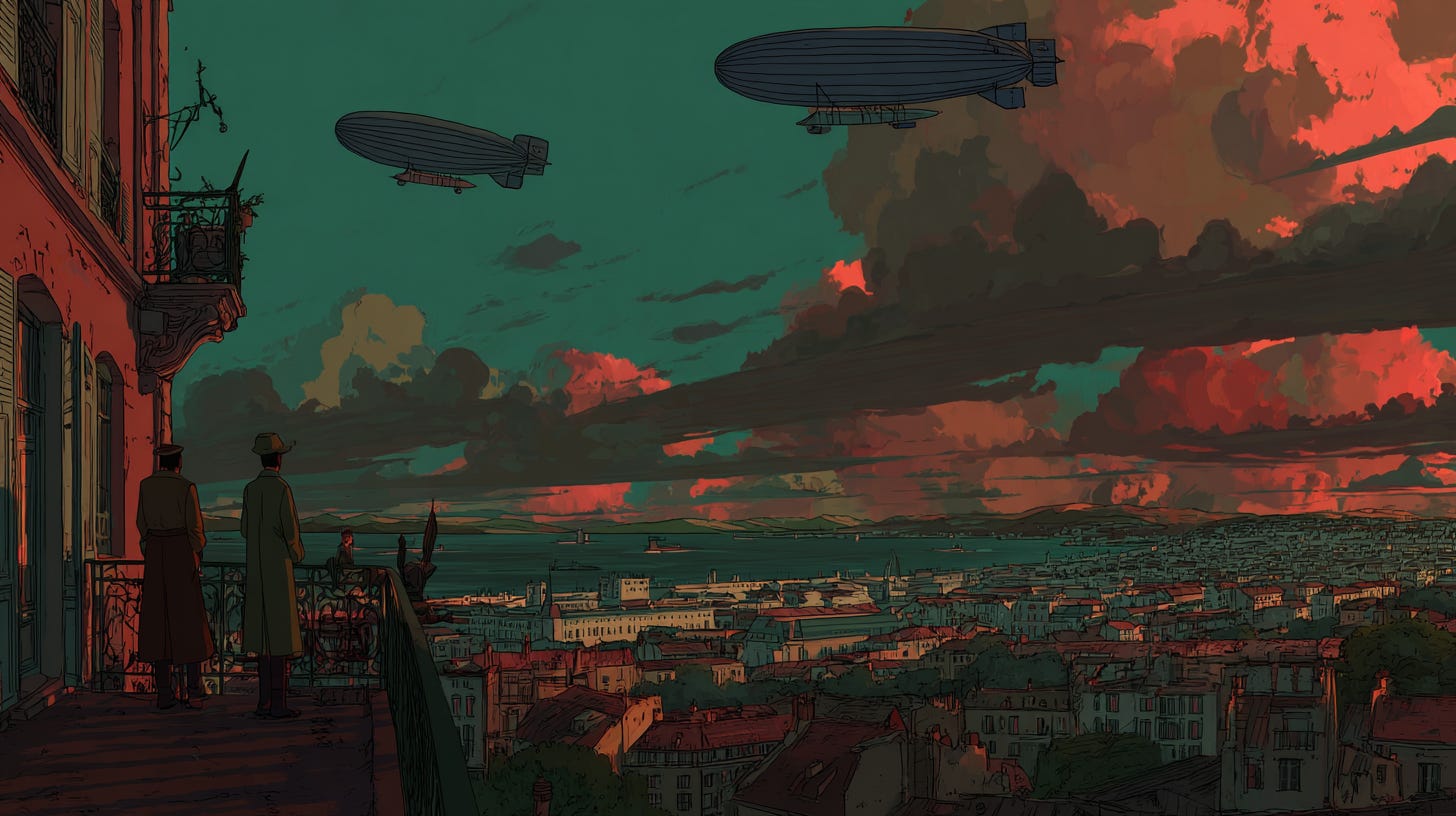
WORLDBUILDING
“Worldbuilding” has become a kind of catch-all to describe the expansive toils of the modern-day creator.
The act of creation is no longer enough. Creators must also be savvy in market strategy, brand building, business fundamentals, accounting, sales, operations, and design — just to break through the noise.
All you have to do is build a world and then articulate it on platforms that aren’t designed to accommodate it and won’t pay you for the effort — that’s it! Jamie’s frustration with Scenes is all of our frustration.
Yet here we are, as CEOs and sovereign rulers of our stories, still trying to tell them.
The good news, though, is that we each have our own worlds — embodiments of our singular lived experiences and the art those have inspired. And it’s that uniqueness that leads to “creative resilience” — to borrow words from an excellent essay on worldbuilding by Yancey Strickler (co-founder of Kickstarter and Metalabel). (I’d highly recommend spending time with the whole piece.)
Now, rarely does that mean building an actual new world, but if you can express your story with all the tactile depth and verisimilitude of Middle Earth, you’re in business.
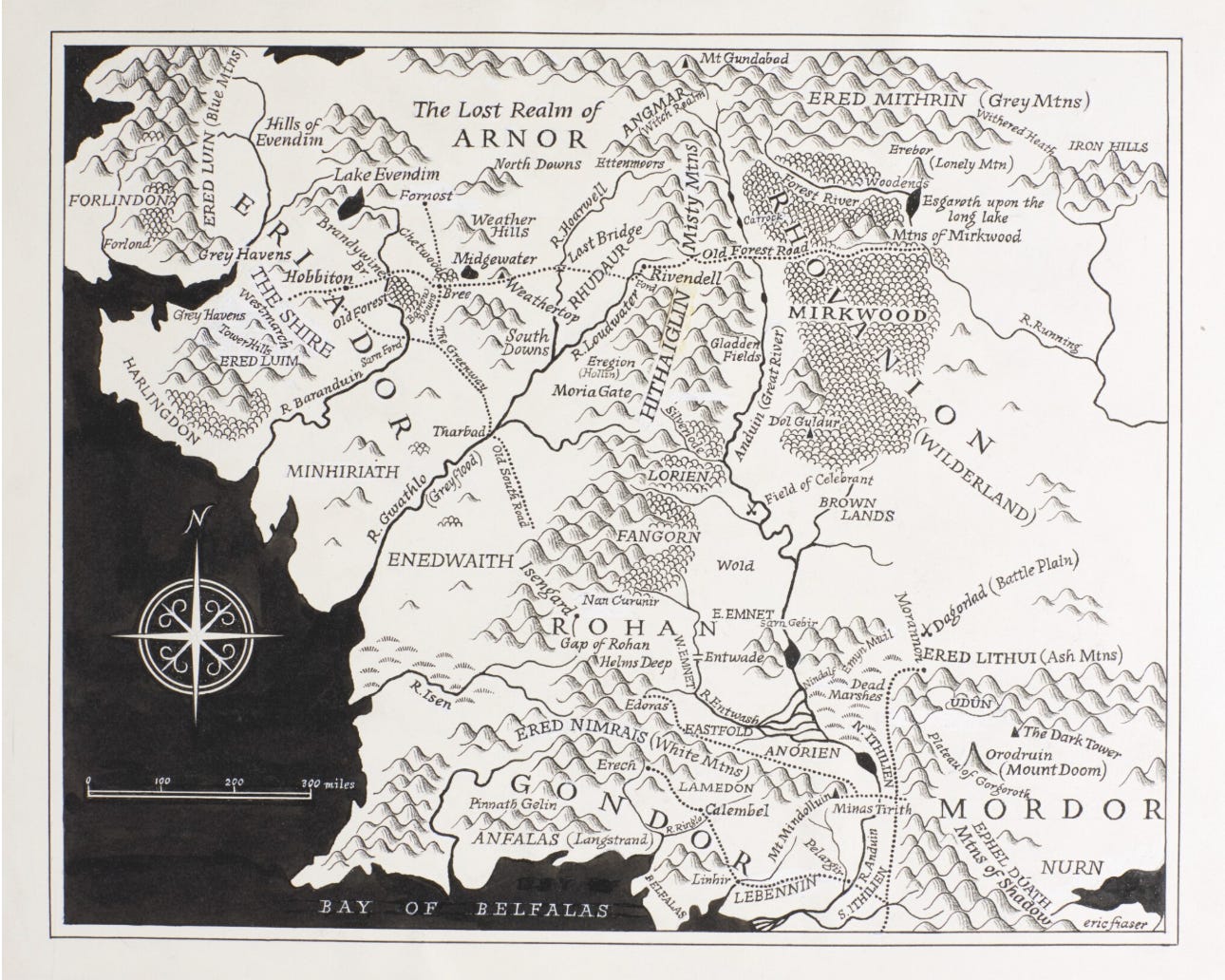
As a proud nerd, though, I couldn’t help but build an actual world. While Moon Man has been masquerading in place of my truer, stuttering, fearful self, the latter has had a lot of time to imagine actual new worlds.
Those began to gain new form after therapy sessions, when I’d go to cafes to reflect and journal. That’s where I first stumbled upon Moon Man. And when he appeared, it felt completely natural to place him in an imagined realm.
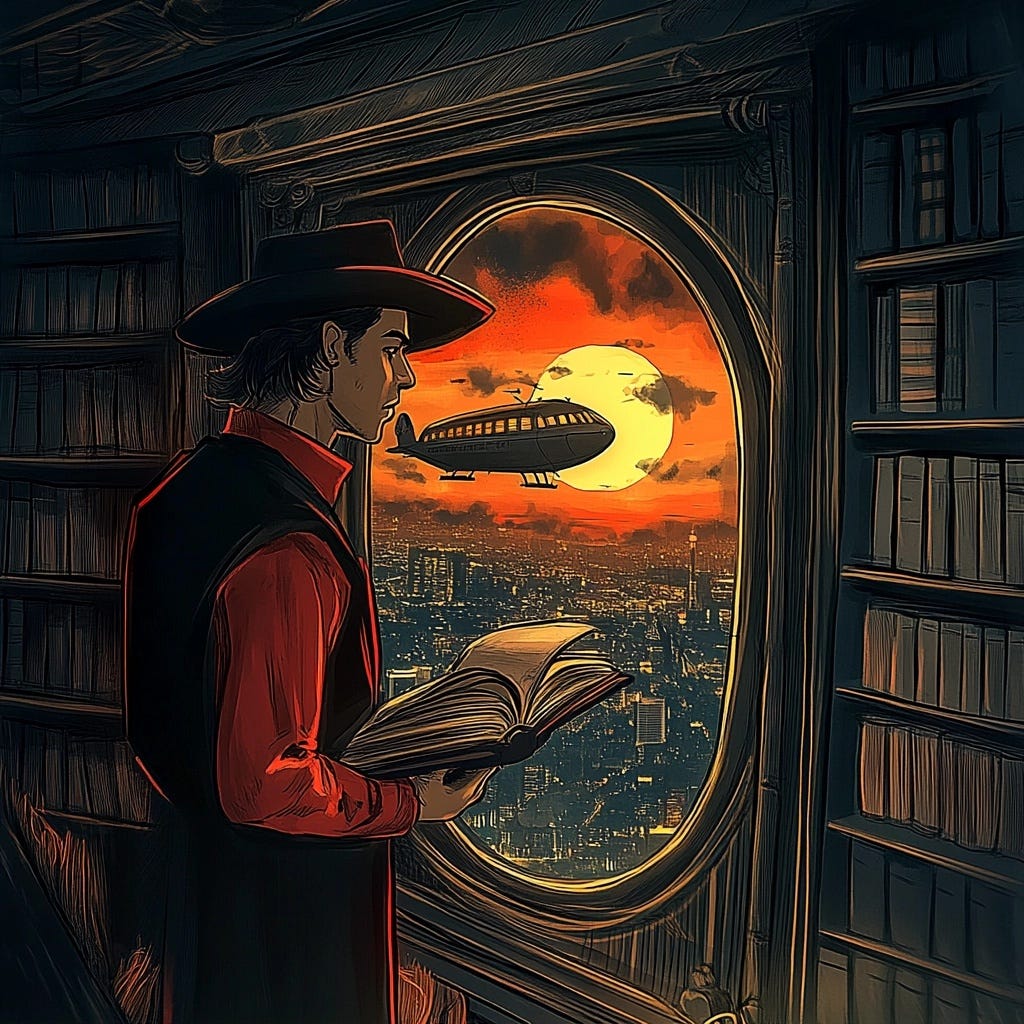
Imagination was familiar territory — my safe harbor — and when I could see him in the cinema of my mind, I could better understand his machinations, and start to see where he ended and I began.
Inevitably, other characters emerged, and what began as a therapeutic exercise grew into an entire world.
BRANEWORLD
My father read The Hobbit and Lord of the Rings to me when I was very young, so imagined realms have long been a source of refuge.
In The Silmarillion – the bible of LOTR lore – Tolkien suggests that his universe emerged from music. And as someone who has dedicated his life to the stuff, that’s an idea I can get behind.
Then I came across string theory and wondered if, perhaps, there’s some truth to Tolkien’s musings. What if the fundamental particles of the universe are literally tiny vibrating strings?
I started thinking about the Big Bang as the result of some cosmic orchestra that played a note so resonant it birthed a universe.
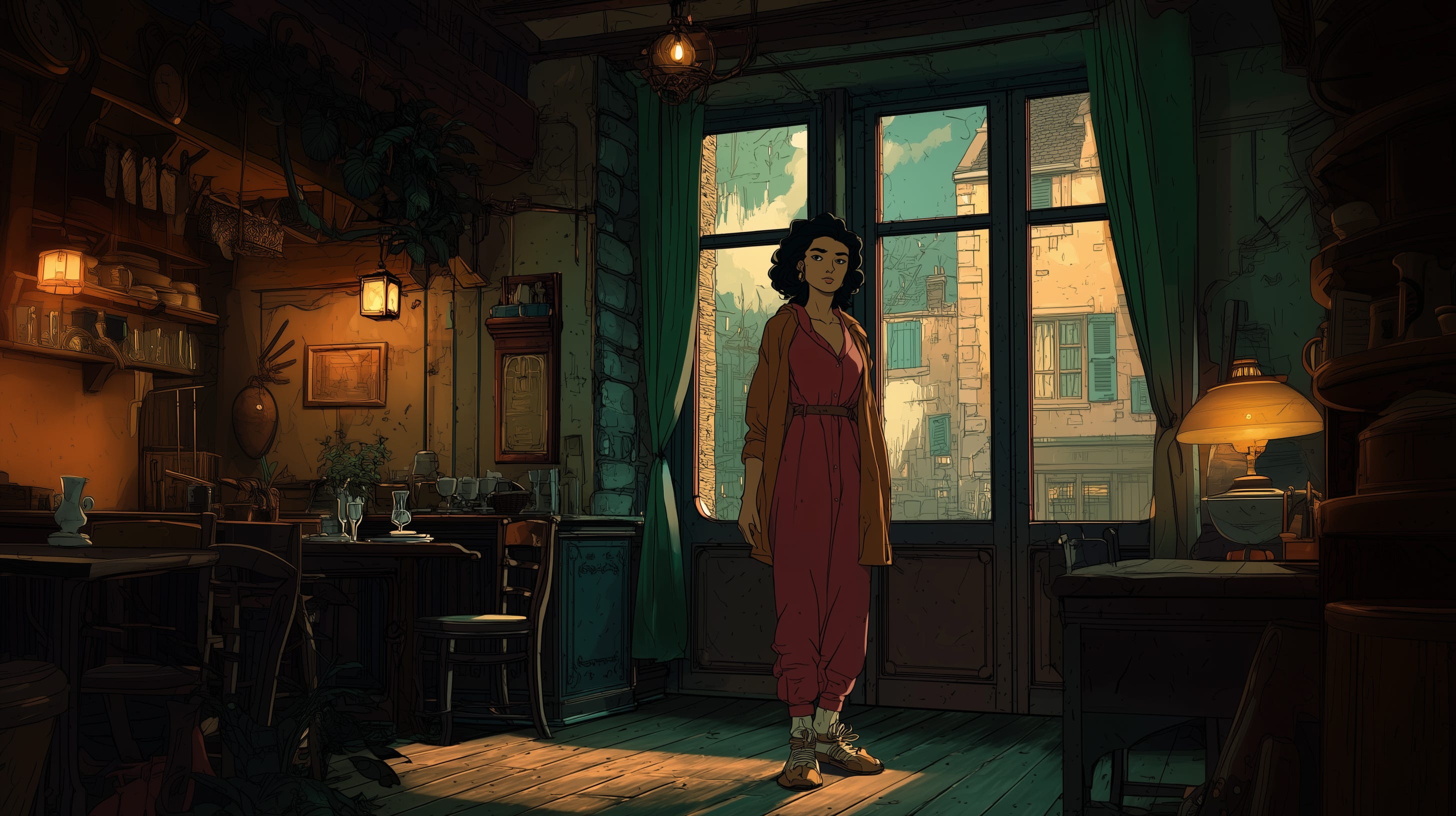
Whilst in therapy I was reading a lot of Brian Greene, a theoretical physicist who explores string theory — amongst other frameworks.
In one of his books, I came across ‘branes’, and a story began to emerge.
Branes are complicated, but in overly simple terms, they’re multi-dimensional objects, like giant sheets of paper, floating in space, where we and everything we know exists
As the universe cools from higher energy states to lower – in the aftermath of the big bang, for instance – stable defects can form naturally as branes.
And when a brane meets an anti-brane – its mirror image – a cosmic dance ensues. Annihilation can occur, or something entirely new may emerge, far greater than the sum of its parts.
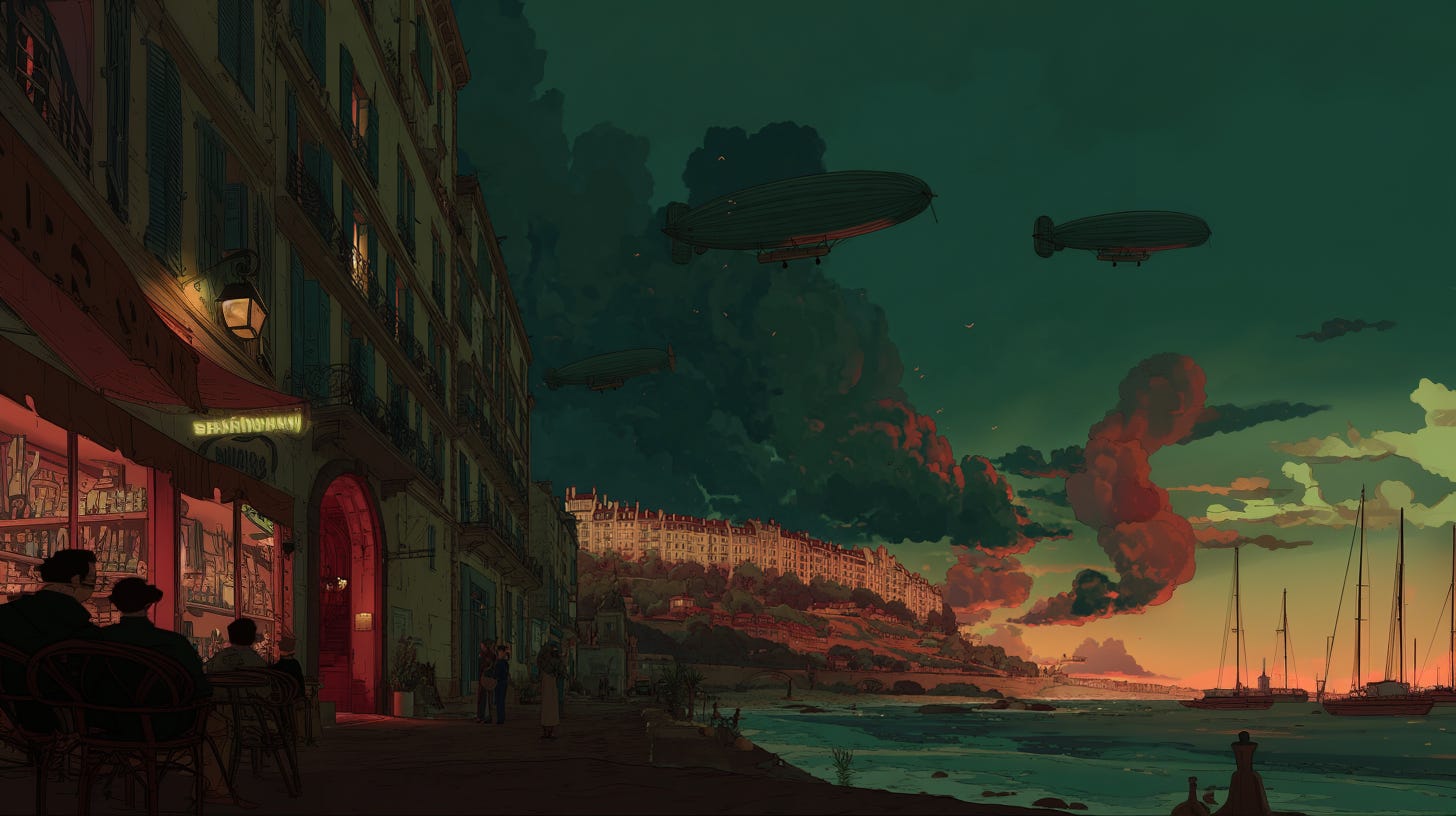
What if Braneworld came into being, I thought, when the higher energy of the “brain world” – i.e. my mind – was fractured?
What if, when I lost trust in my own voice and my “true self” went into hiding, the “stable defect” and “mirror” – i.e. Moon Man – emerged and a whole world came into being? And what if that’s where I’ve been living this whole time?
We all have a mirror image that we protect from destruction, and that became a connective thread that ultimately led to Meridians.
It’s not an easy story to tell on the platforms available to us, but that’s probably a good thing.
We should imagine our stories outside the constraints of “the platform,” lest we question our worth when we find the pieces that make us unique are exactly the bits that it doesn’t accommodate.
In the words of the writer and technologist Laurel Schwulst, whom Strickler quotes in his piece:
“For those of us who feel different, who don’t easily fit into structures of this society or this world, we have to make our own structures, definitions, and taxonomies to feel at home — that is, to build our own world. And while others might be confused why we spend so much energy inventing new names and containers seemingly constantly, it’s important to remember doing this helps us simply exist … so that we can connect in this one world we share.”
So what is your Braneworld, lying latent in the cinema of your mind, waiting to bring others into your path?
CODA
RIP to D’Angelo – one of the kings of neo-soul and, certainly, an architect of its broader world.
He created so much inspiring music, but this one’s my favorite, and it feels particularly apropos.
Tremendous gratitude to Stacia, Ashley, Carolina, and Erik for being paid Guided by Voyces supporters. 🌻